
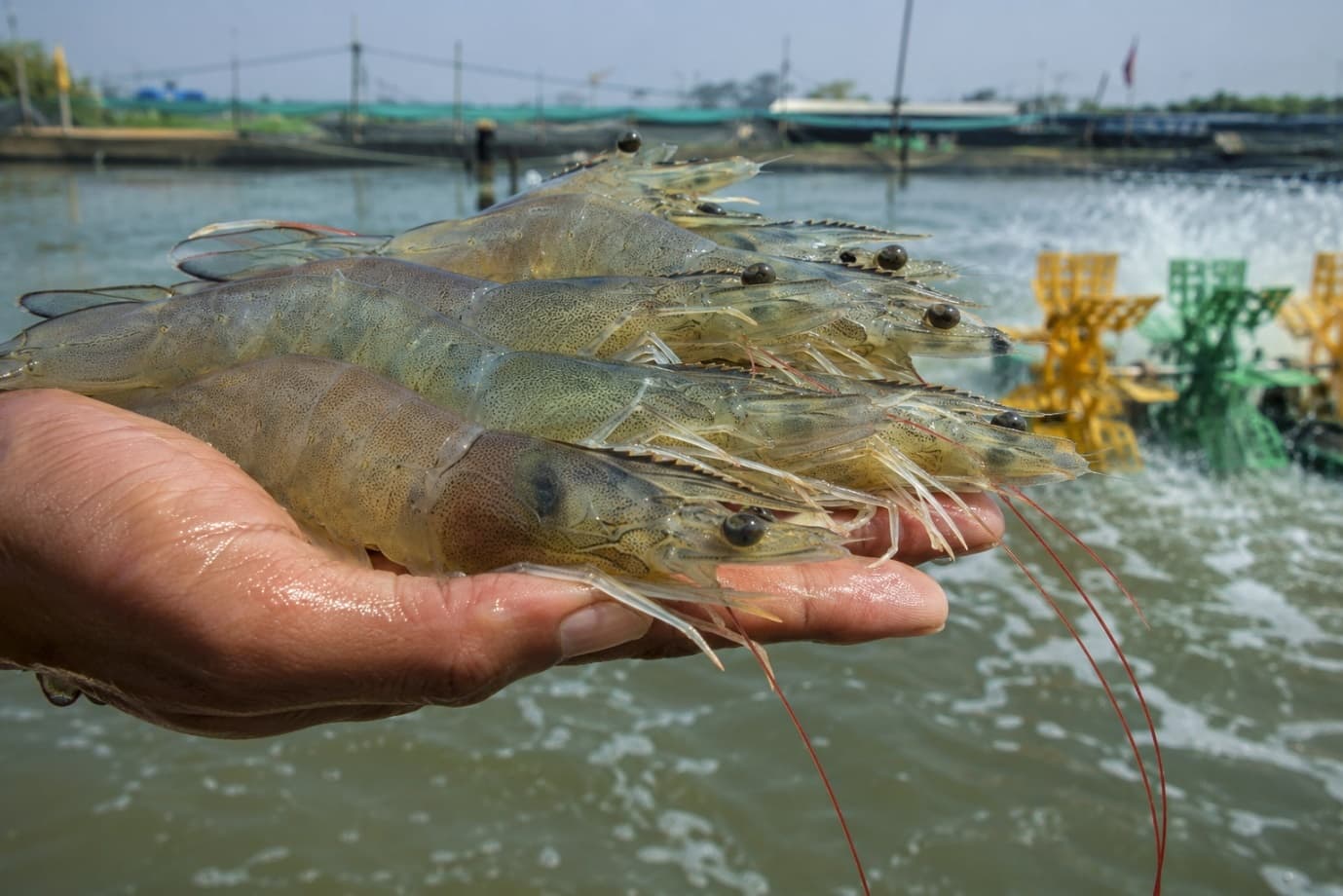
Over the past two decades, one shrimp species has completely transformed India's aquaculture sector—Vannamei shrimp. Also known as Pacific white shrimp (Litopenaeus vannamei), this species has become the backbone of India's shrimp farming industry due to its fast growth, excellent survival, adaptability, and strong global market demand.
Today, the majority of farmed shrimp produced in India is Vannamei. From Andhra Pradesh to Gujarat, thousands of shrimp farmers have adopted this species because it offers higher productivity and better economic returns compared to many traditional shrimp species.
But what is Vannamei shrimp, and why has it become the preferred choice for farmers across India? Let's explore the reasons behind its remarkable success.
What Is Vannamei Shrimp?
Vannamei shrimp, scientifically known as Litopenaeus vannamei, is a marine shrimp species native to the Pacific coast of Central and South America. It was introduced into Asian aquaculture because of its excellent farming characteristics and has since become the most widely farmed shrimp species in the world.
Commonly known as whiteleg shrimp or Pacific white shrimp, Vannamei adapts well to different farming environments, grows quickly, and performs efficiently under scientific farm management.
Its ability to thrive in a wide range of salinity levels has made it suitable for farming in both coastal and inland aquaculture systems.
Today, Vannamei is recognized as one of the most successful shrimp species ever introduced into commercial aquaculture.
Why Vannamei Shrimp Is Popular
Many people ask why Vannamei shrimp is popular among farmers.
The answer lies in its unique combination of biological and economic advantages.
Compared to many other shrimp species, Vannamei grows faster, utilizes feed more efficiently, adapts to different water conditions, and produces high survival rates when managed properly.
It also has strong acceptance in international seafood markets, making it an attractive option for exporters and processors.
These characteristics have helped Vannamei become the dominant species in modern shrimp farming.
Vannamei Shrimp Farming in India
Vannamei shrimp farming in India began expanding rapidly after the species was officially introduced for commercial culture.
The availability of Specific Pathogen Free (SPF) seed, improved hatchery technology, better feed, scientific farm management, and modern processing facilities supported its rapid adoption.
Today, major shrimp-producing states include:
- Andhra Pradesh
- Gujarat
- Odisha
- Tamil Nadu
- West Bengal
These states account for a significant share of India's shrimp production and exports.
The success of Vannamei farming has created employment opportunities across hatcheries, feed manufacturing, processing plants, logistics, exports, and retail sectors, making it one of the most important sectors of Indian aquaculture.
Vannamei Shrimp Growth Rate
One of the biggest reasons for the success of Vannamei is its impressive Vannamei shrimp growth rate.
Under good farm management, healthy shrimp can reach market size within a relatively short culture period.
Fast growth provides several advantages:
- Shorter production cycles.
- Faster cash flow.
- Better pond utilization.
- Increased annual production.
- Improved profitability.
Growth depends on several factors, including water quality, feed management, stocking density, seed quality, and overall farm management.
Farmers who maintain stable pond conditions generally achieve better growth performance and higher survival rates.
Advantages of Vannamei Shrimp
There are many advantages of Vannamei shrimp that explain its popularity across the aquaculture industry.
Some of the major benefits include:
- Fast growth.
- High survival under proper management.
- Efficient feed conversion.
- Wide salinity tolerance.
- Good disease management when biosecurity is maintained.
- Strong market demand.
- Uniform size.
- Excellent processing quality.
- High export value.
These advantages allow farmers to produce more shrimp while improving overall production efficiency.
Vannamei vs Black Tiger Shrimp
One of the most common comparisons is Vannamei vs Black Tiger shrimp.
Black Tiger shrimp (Penaeus monodon) was once India's dominant farmed shrimp species.
Although Black Tiger shrimp remains valuable in certain markets, Vannamei has become more widely adopted because of its farming efficiency.
Vannamei generally offers:
- Faster growth.
- Better feed conversion.
- More consistent production.
- Higher stocking densities under scientific management.
- Better adaptability to intensive farming systems.
Black Tiger shrimp, however, is still appreciated for its larger size and premium value in some export markets.
Both species have their strengths, but Vannamei has become the preferred commercial choice for most farmers.
Vannamei Shrimp Market Demand
Strong Vannamei shrimp market demand has been another major reason for its success.
Consumers around the world appreciate Vannamei for its mild flavour, firm texture, attractive appearance, and versatility in cooking.
Restaurants, supermarkets, hotels, seafood processors, and food manufacturers use Vannamei in a wide variety of products including:
- Frozen shrimp.
- Peeled shrimp.
- Cooked shrimp.
- Breaded shrimp.
- Ready-to-cook meals.
- Value-added seafood products.
Its consistent size and quality make it highly suitable for international trade.
This strong demand provides confidence to farmers investing in shrimp production.
Pacific White Shrimp Farming Guide
A successful Pacific white shrimp farming guide begins with scientific management rather than relying on guesswork.
Important management practices include:
- Proper pond preparation.
- Stocking healthy SPF seed.
- Maintaining excellent water quality.
- Balanced feeding.
- Adequate aeration.
- Strong biosecurity.
- Daily pond monitoring.
- Regular water testing.
- Timely harvesting.
Success depends on managing every stage of the production cycle carefully.
Experienced farmers understand that consistency in management often determines profitability more than any single farming practice.
Whiteleg Shrimp Benefits for Consumers
The Whiteleg shrimp benefits extend beyond farmers and exporters.
Consumers also benefit because Vannamei shrimp is:
- Rich in high-quality protein.
- Low in calories.
- Naturally low in saturated fat.
- A source of omega-3 fatty acids.
- Rich in vitamins and minerals such as selenium, iodine, phosphorus, zinc, and vitamin B12.
Its mild taste and quick cooking time make it suitable for curries, stir-fries, biryani, grilled dishes, pasta, salads, and many other recipes.
As domestic shrimp consumption continues to grow in India, Vannamei is becoming increasingly popular among health-conscious consumers.
Is Vannamei the Best Shrimp Species for Farming?
Many farmers ask whether Vannamei is the best shrimp species for farming.
There is no universal answer because farming success depends on local conditions, farm management, water quality, and market requirements.
However, Vannamei has demonstrated outstanding performance across many farming systems due to its adaptability, growth rate, feed efficiency, and commercial demand.
This combination of biological and economic advantages explains why it has become the world's leading farmed shrimp species.
Conclusion
The success of Vannamei shrimp has transformed India's aquaculture industry and positioned the country among the world's leading shrimp producers.
Its fast growth, high productivity, strong export demand, farming adaptability, and excellent consumer acceptance have made it the preferred choice for thousands of farmers.
As technology, disease management, and sustainable farming practices continue to improve, Vannamei shrimp farming in India is expected to remain a major driver of economic growth and seafood production.
Whether viewed from the perspective of farmers, processors, exporters, or consumers, the future of Pacific white shrimp remains exceptionally promising.
The continued success of this remarkable species will play an important role in strengthening India's shrimp industry and supporting the country's leadership in global aquaculture for many years to come.


