Successful shrimp farming is not determined by feed alone, nor by stocking the best shrimp seed. The single most important factor that influences shrimp growth, survival, feed conversion, and profitability is shrimp water quality.
Shrimp spend their entire life in water. Every breath they take, every meal they eat, and every gram they grow depends on the quality of the pond environment. Even small changes in water quality can cause stress, reduce feeding activity, slow growth, increase disease risk, and lower survival rates.
This is why experienced farmers say that they are not just growing shrimp—they are managing water. Understanding the key shrimp pond water quality parameters and monitoring them daily is essential for producing healthy and profitable crops.
Why Water Quality Matters in Shrimp Farming
Unlike land animals, shrimp cannot move away from poor environmental conditions. If the pond water quality deteriorates, shrimp remain exposed to the problem until corrective action is taken.
Good water quality supports:
- Healthy shrimp growth
- Better feed conversion ratio (FCR)
- Higher survival rates
- Stronger immune systems
- Improved water stability
- Lower disease outbreaks
- Better harvest quality
Poor water quality, on the other hand, often leads to reduced feeding, stress, disease outbreaks, and economic losses.
For this reason, successful farmers invest just as much time in monitoring water quality as they do in feeding their shrimp.
Ideal Water Quality for Shrimp Farming
There is no single measurement that determines water quality. Instead, farmers must monitor several important parameters together.
The ideal water quality for shrimp farming includes stable levels of dissolved oxygen, pH, salinity, alkalinity, temperature, ammonia, and nitrite.
The goal is not simply to achieve ideal values once but to maintain stable conditions throughout the culture period.
Sudden fluctuations are often more harmful than slightly imperfect values.
Dissolved Oxygen: The Most Critical Parameter
Among all water quality factors, dissolved oxygen is often considered the most important.
Shrimp require oxygen for respiration, just like humans. If oxygen levels fall, shrimp become stressed, reduce feed intake, and may gather near aerators or pond edges.
The recommended dissolved oxygen level for shrimp ponds is generally above 5 mg/L, although maintaining even higher levels during periods of rapid growth is beneficial.
Low dissolved oxygen can result from:
- Overstocking
- Excess organic waste
- Algal blooms
- High water temperatures
- Poor aeration
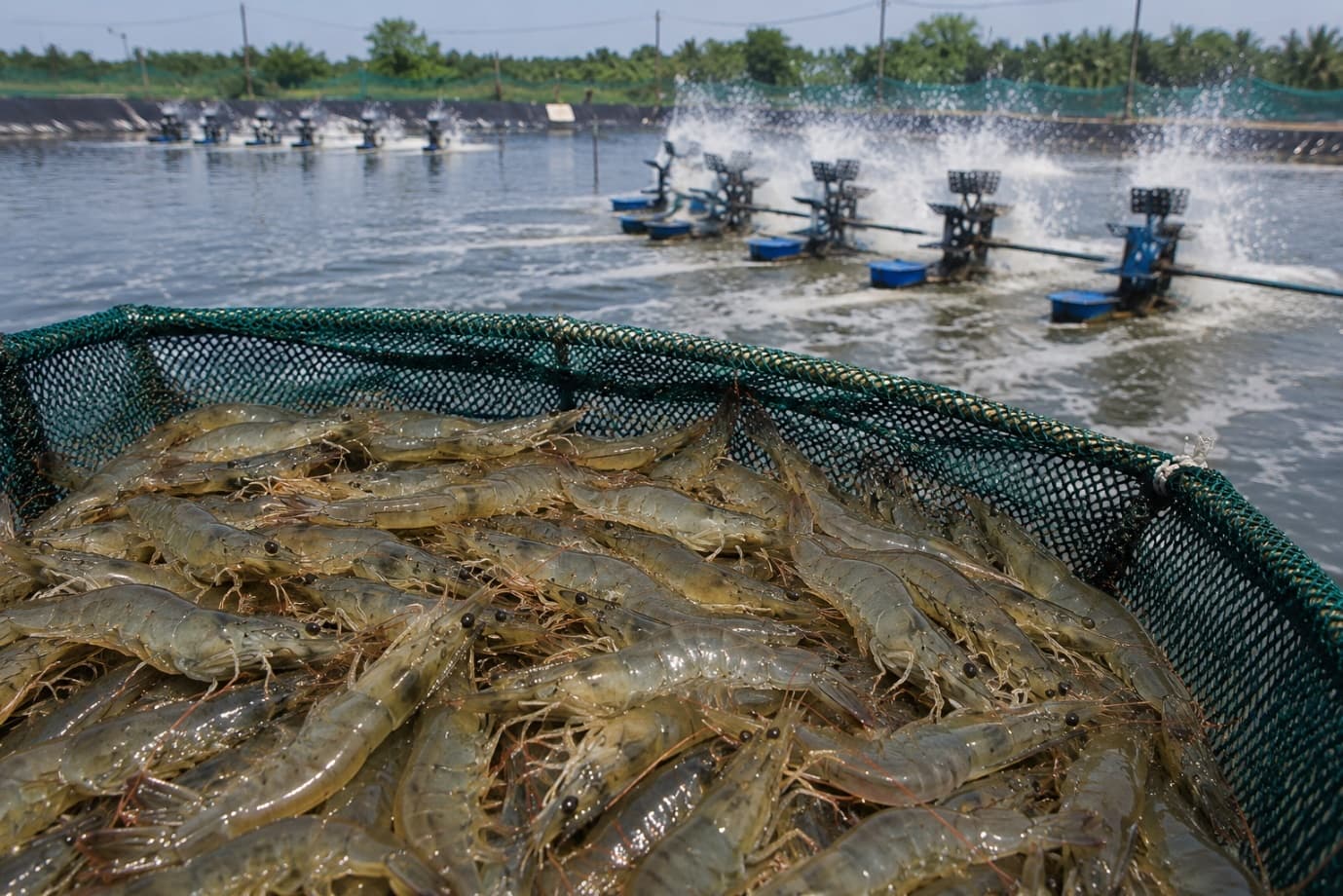
Farmers use paddlewheel aerators, blowers, and proper pond management to maintain adequate oxygen throughout the day and night.
pH Level and Shrimp Health
The pH level measures how acidic or alkaline pond water is.
One of the most frequently searched questions is the best pH for shrimp farming.
For Vannamei shrimp, a pH range of approximately 7.5 to 8.5 is generally considered suitable. More important than the exact number is maintaining stability throughout the day.
Large daily fluctuations in pH can stress shrimp and reduce their appetite.
Excessive algal growth often causes pH to rise during the afternoon and fall at night.
Regular monitoring helps farmers detect changes before they become serious.
Salinity Management for Vannamei Shrimp
Salinity refers to the concentration of dissolved salts in water.
One of the major advantages of Vannamei shrimp is its ability to grow across a wide range of salinity levels. This adaptability has helped expand Vannamei shrimp farming into many inland areas.
However, salinity management for Vannamei shrimp remains important.
Rapid changes in salinity caused by heavy rainfall, water exchange, or evaporation can stress shrimp and affect growth.
Farmers should make salinity adjustments gradually whenever possible to avoid sudden environmental shock.
Ammonia: An Invisible Threat
Among the most dangerous water quality problems is ammonia.
Ammonia is produced from uneaten feed, shrimp waste, decomposing organic matter, and dead algae.
High ammonia levels damage shrimp gills, reduce oxygen uptake, weaken immunity, and slow growth.
Effective ammonia control in shrimp ponds includes:
- Avoiding overfeeding
- Removing excess organic waste
- Maintaining adequate aeration
- Supporting beneficial bacterial activity
- Monitoring water quality regularly
Preventing ammonia accumulation is far easier than correcting severe ammonia problems later.
Nitrite Management in Shrimp Farming
Closely related to ammonia is nitrite.
During the natural nitrogen cycle, beneficial bacteria convert ammonia into nitrite before eventually converting it into the less harmful nitrate.
However, if this process becomes unbalanced, nitrite levels can increase.
Proper nitrite management in shrimp farming involves maintaining healthy microbial populations, good aeration, balanced feeding, and regular water quality monitoring.
High nitrite levels reduce the ability of shrimp to transport oxygen efficiently, increasing stress and reducing productivity.
Daily Water Testing for Shrimp Farms
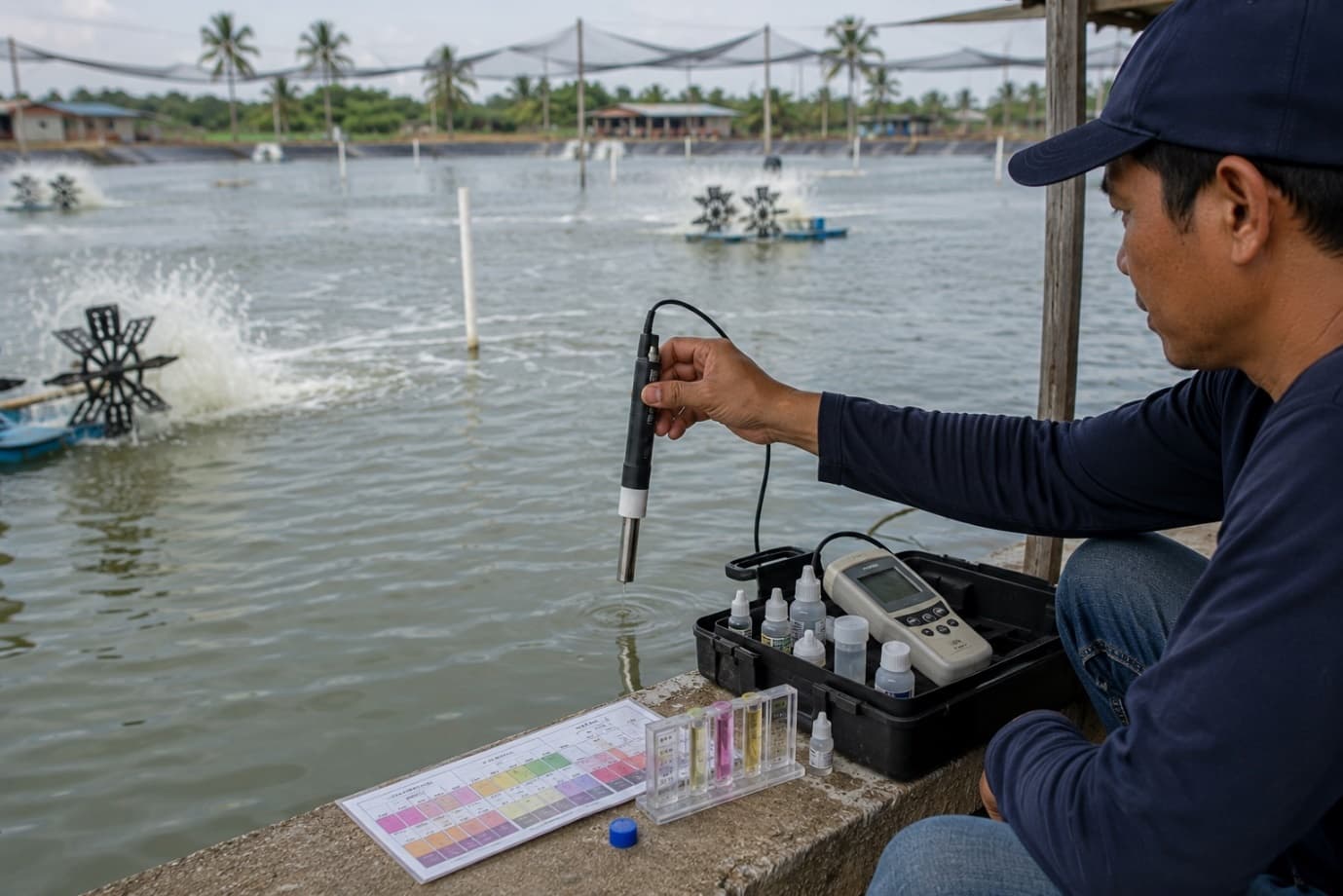
One of the habits shared by successful shrimp farmers is daily water testing for shrimp farms.
Rather than waiting for visible problems, they monitor important parameters every day and maintain detailed records.
Daily testing commonly includes:
- Dissolved oxygen
- pH
- Temperature
- Salinity
- Ammonia
- Nitrite
- Alkalinity
Tracking these values over time helps farmers identify trends before they become major problems.
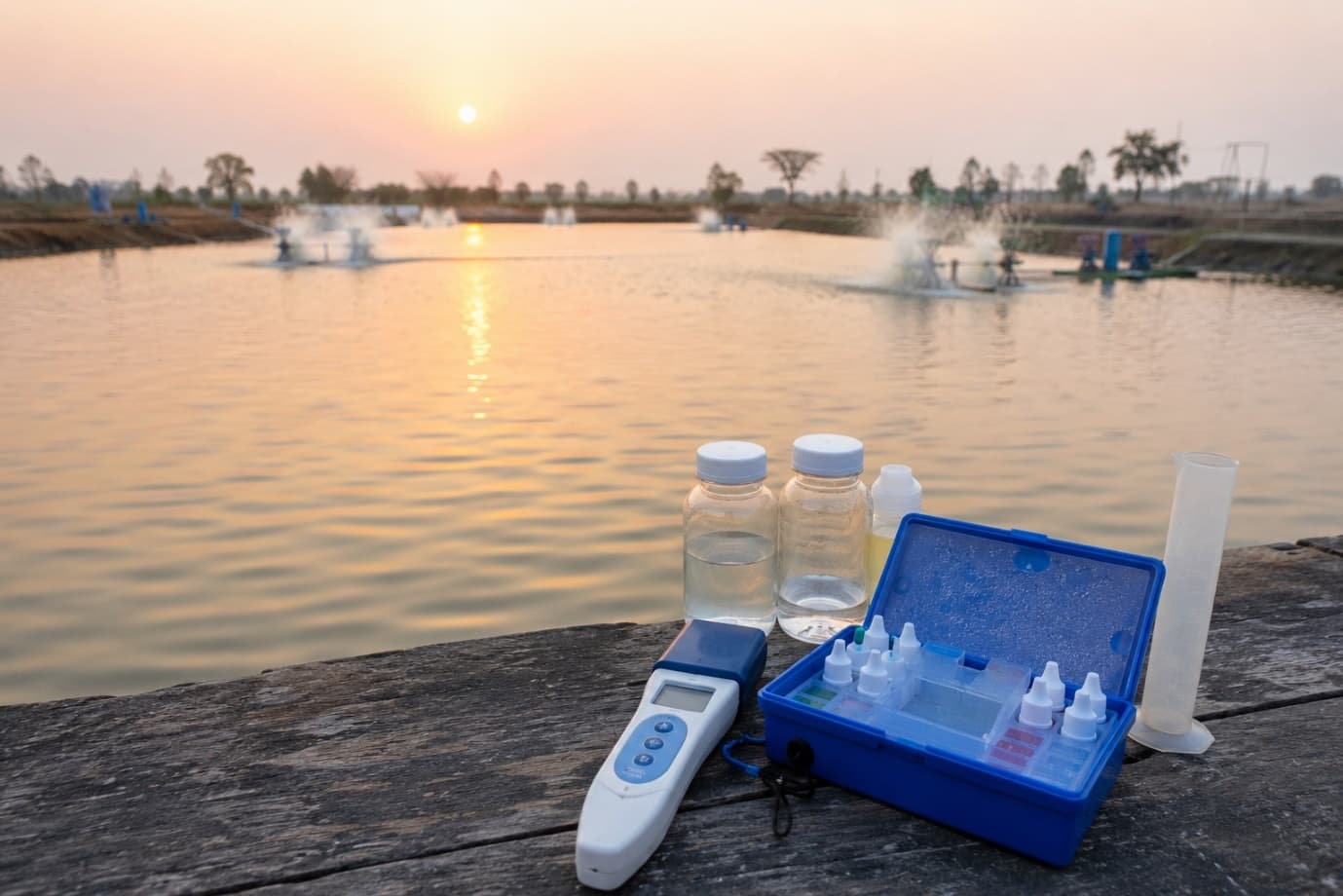
Modern digital water quality meters and portable testing kits have made routine monitoring faster and more accurate than ever before.
How to Maintain Shrimp Pond Water Quality
Many new farmers ask how to maintain shrimp pond water quality throughout the crop.
The answer lies in consistent daily management rather than occasional corrective action.
Good water quality management includes:
- Preparing ponds properly before stocking.
- Using healthy, disease-free seed.
- Following balanced feeding practices.
- Preventing overfeeding.
- Operating aerators efficiently.
- Monitoring water parameters daily.
- Removing sludge and excess organic matter.
- Maintaining healthy plankton populations.
- Responding quickly to sudden environmental changes.
Preventive management is always more effective than trying to solve major water quality problems after they develop.
Water Quality Management Techniques for Long-Term Success
Modern shrimp farming increasingly relies on scientific water quality management techniques.
Farmers now use automated sensors, dissolved oxygen meters, pH meters, salinity meters, water testing kits, probiotics, aeration systems, and digital monitoring platforms to manage ponds more precisely.
Technology allows farmers to detect changes early, reduce production risks, improve feed efficiency, and increase profitability.
Combining good farm management with regular water testing helps create a stable environment where shrimp can grow to their full potential.
Conclusion
In shrimp farming, water is much more than just the environment where shrimp live—it is the foundation of the entire production system.
Maintaining excellent shrimp water quality is essential for healthy growth, efficient feed utilization, disease prevention, and profitable harvests. Parameters such as dissolved oxygen, pH level, salinity, ammonia, and nitrite should never be left to chance.
Regular monitoring, preventive management, and timely corrective actions allow farmers to maintain stable pond conditions throughout the culture cycle.
As India's shrimp industry continues to adopt modern aquaculture practices, effective water quality management will remain one of the most important factors determining farm success. Farmers who invest time in understanding and managing their pond water are ultimately investing in healthier shrimp, better yields, and a more profitable future.