Have you ever wondered how the shrimp served in a restaurant or purchased from a supermarket reaches your plate? The journey is far more complex than most people imagine. Before shrimp reaches consumers, it passes through multiple carefully managed stages involving farmers, processors, cold storage facilities, transport companies, exporters, retailers, and quality inspectors.
India is one of the world's largest shrimp producers and exporters, supplying premium-quality shrimp to more than 100 countries. Every step of the shrimp supply chain is designed to maintain freshness, food safety, and product quality.
From hatcheries to harvest, processing plants to refrigerated transport, this article explains the complete shrimp farm to plate journey and how India's seafood industry ensures consumers receive safe and high-quality shrimp.
Step 1: Shrimp Farming Begins at the Hatchery
Every shrimp begins its journey in a hatchery.
Broodstock shrimp are carefully managed to produce healthy larvae. These larvae develop into post-larvae (PL), which are then supplied to shrimp farms for stocking.
Modern hatcheries use advanced technology to produce Specific Pathogen Free (SPF) shrimp seed. Healthy seed is one of the most important factors determining the success of the entire crop.
After quality checks, farmers transport the shrimp seed to prepared ponds where the farming cycle begins.
Step 2: Shrimp Farming and Pond Management
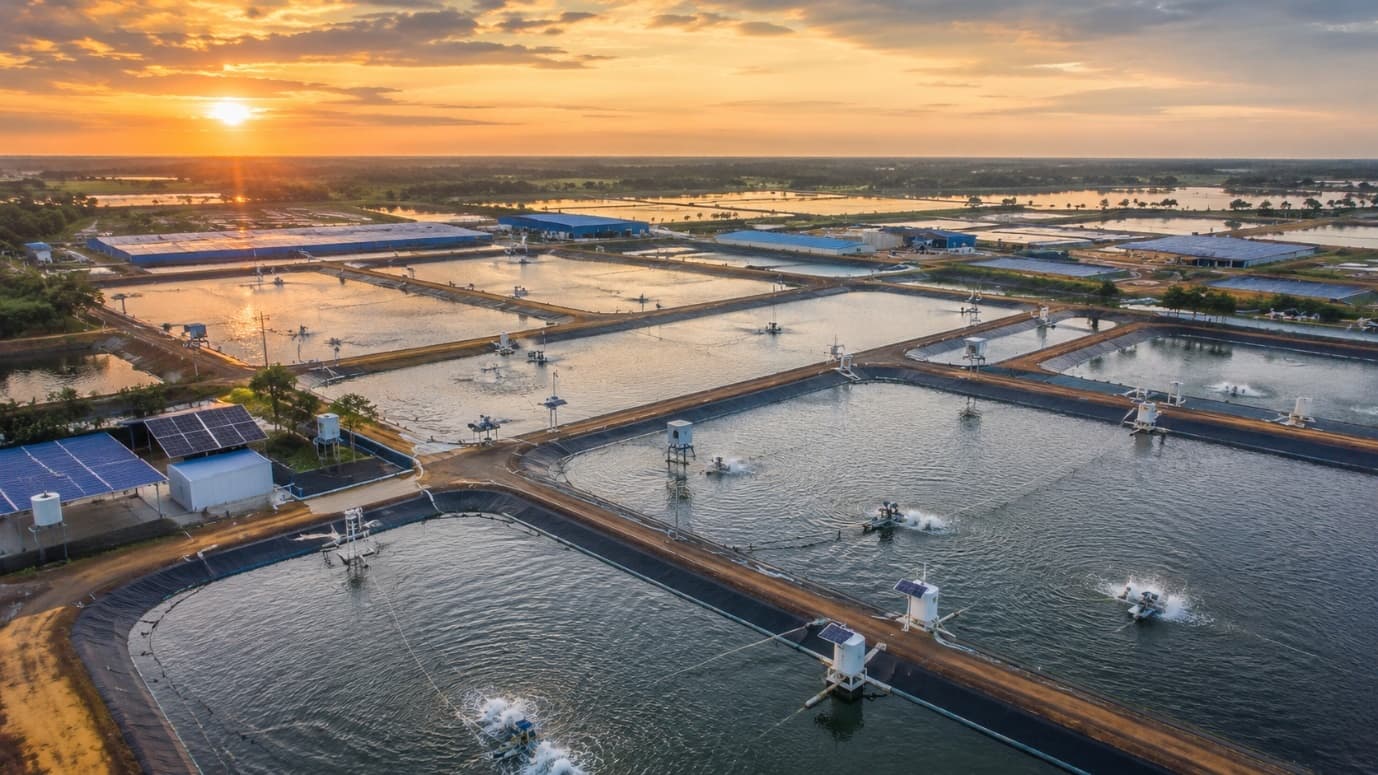
The next stage of the shrimp production process takes place on shrimp farms.
Before stocking, ponds are prepared by removing sludge, drying the pond bottom, applying lime where necessary, and filling the pond with filtered water.
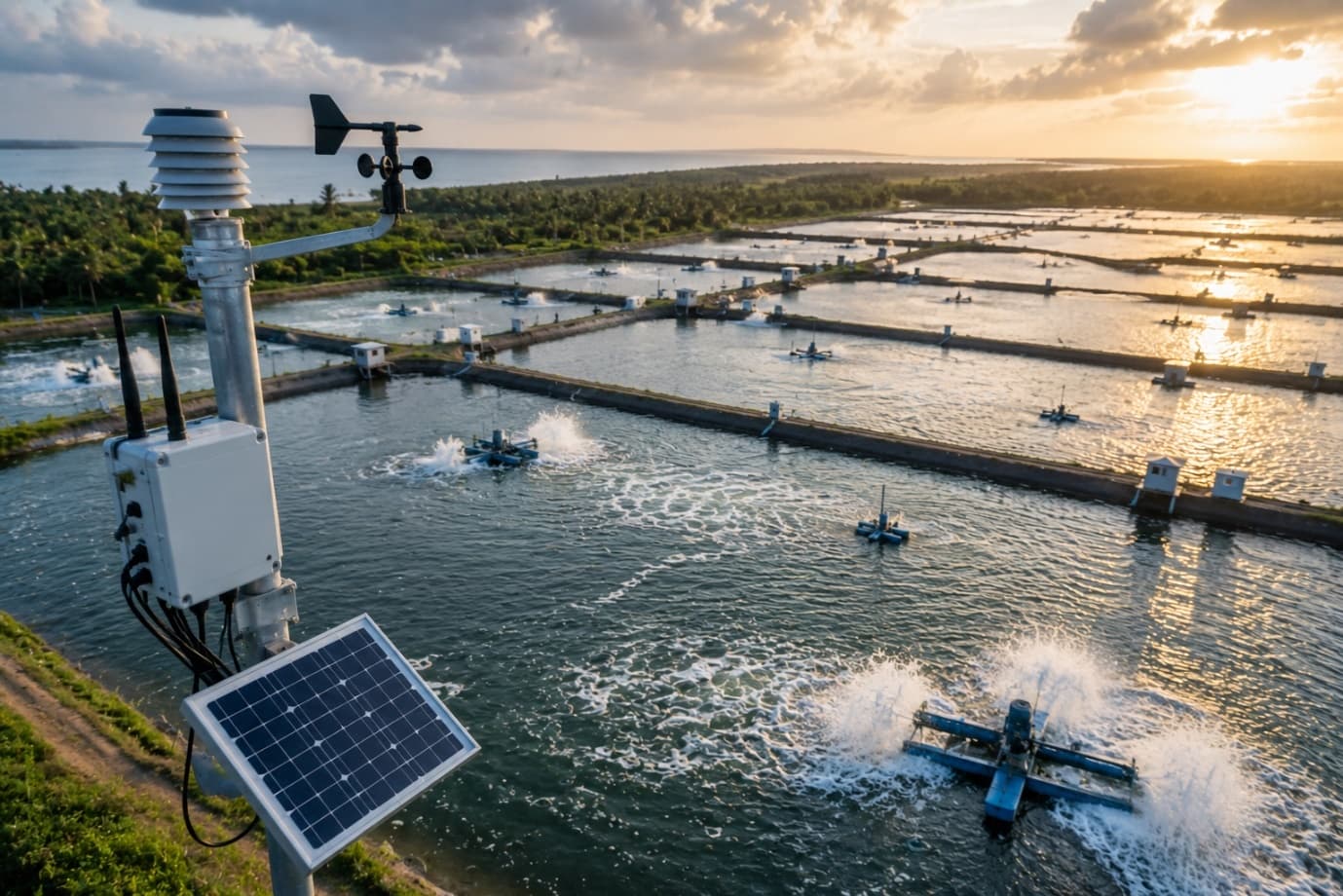
During the culture period, farmers carefully manage:
- Water quality
- Feed
- Aeration
- Shrimp health
- Biosecurity
- Growth monitoring
Regular testing of dissolved oxygen, pH, salinity, ammonia, nitrite, and temperature helps maintain healthy pond conditions.
Depending on the farming system, shrimp generally grow for several months before reaching market size.
Successful shrimp farming depends on maintaining stable environmental conditions throughout the production cycle.
Step 3: Shrimp Harvesting
Once shrimp reach the desired size, harvesting begins.
Shrimp harvesting and processing starts with careful planning. Farmers coordinate with buyers or processing companies to determine the ideal harvest date based on shrimp size and market demand.
Before harvest, feeding is usually stopped for a short period to improve product quality.
Harvesting is often carried out during cooler parts of the day to maintain freshness.
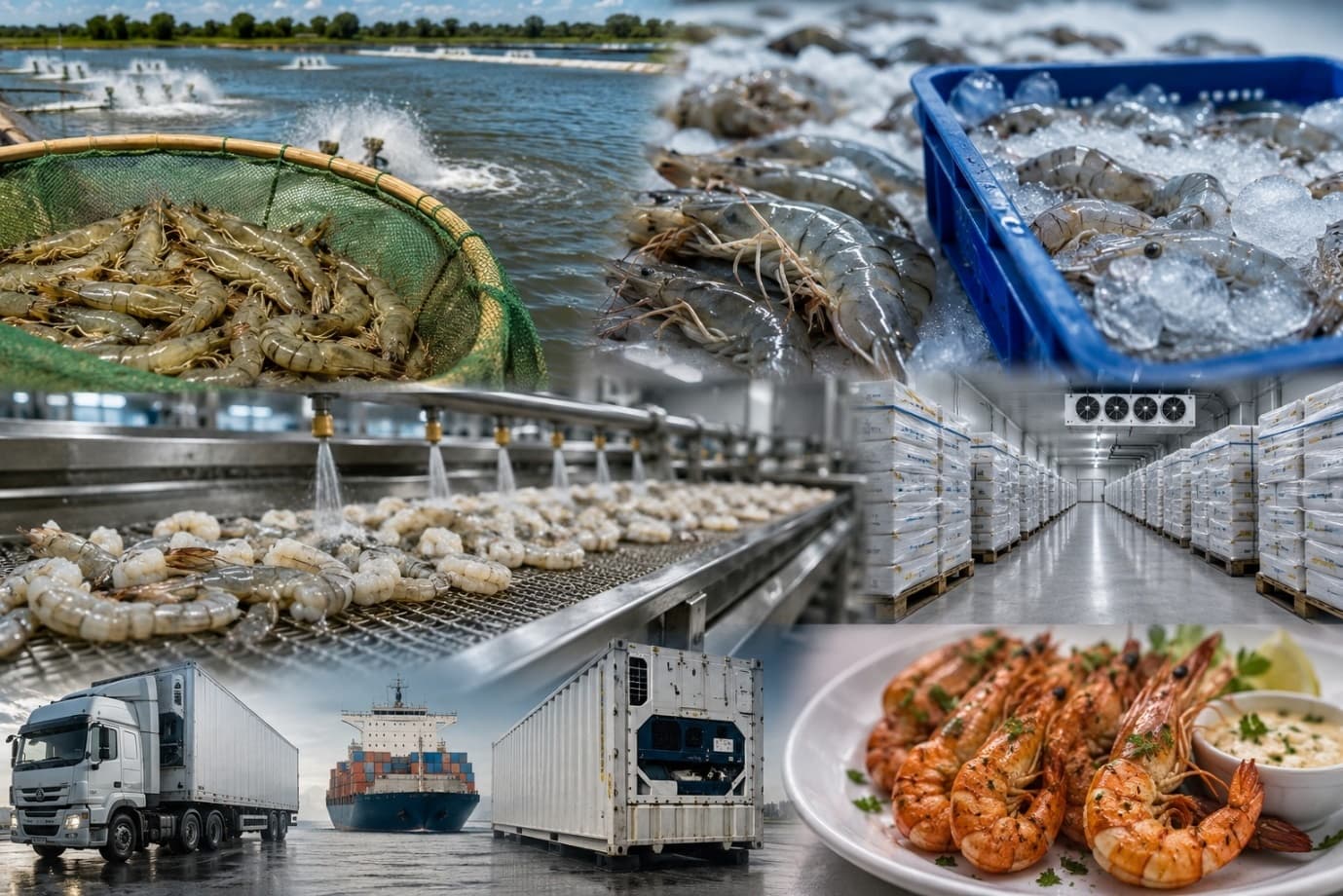
Shrimp are collected carefully using harvest nets or by draining the pond. Immediately after harvest, shrimp are washed with clean water and placed in ice to reduce temperature quickly.
Rapid chilling slows bacterial growth and helps preserve freshness until processing.
Step 4: Transportation to Processing Plants
After harvesting, shrimp are transported to seafood processing facilities.
Maintaining low temperatures during transport is critical.
Insulated containers with adequate ice help preserve shrimp quality and prevent spoilage.
The faster shrimp reaches the processing plant, the better its freshness and overall market value.
This stage marks the beginning of India's highly organized shrimp processing industry in India.
Step 5: Shrimp Processing
Many consumers wonder how shrimp is processed in India before it reaches supermarkets or restaurants.
Processing plants follow strict hygiene and food safety protocols.
The typical processing sequence includes:
- Receiving and weighing
- Quality inspection
- Washing
- Grading by size
- Peeling (if required)
- Deveining
- Final washing
- Packaging
- Freezing
- Cold storage
Depending on customer requirements, shrimp may be exported as:
- Head-on shell-on
- Headless shell-on
- Peeled shrimp
- Peeled and deveined shrimp
- Cooked shrimp
- Value-added products
Every stage focuses on maintaining food safety, product consistency, and export-quality standards.
Step 6: Quality Control and Food Safety
Quality inspection plays a vital role throughout the shrimp supply chain explained.
Processing facilities continuously monitor:
- Product freshness
- Size consistency
- Appearance
- Hygiene
- Packaging quality
- Temperature
- Traceability
Many export-oriented processing plants operate under internationally recognized food safety systems to meet the requirements of global markets.
Laboratory testing helps ensure products comply with importing country regulations.
Strict quality control has helped Indian shrimp earn a strong reputation worldwide.
Step 7: Freezing and Cold Storage
After processing, shrimp is frozen using advanced freezing technologies.
Many products use IQF (Individually Quick Frozen) technology, which freezes each shrimp separately.
Rapid freezing preserves:
- Texture
- Taste
- Appearance
- Nutritional value
- Shelf life
The frozen shrimp is then stored in temperature-controlled cold storage facilities until shipment.
Maintaining the correct storage temperature is essential for preserving product quality.
Step 8: Seafood Cold Chain Management
One of the most important parts of the industry is seafood cold chain management.
The cold chain refers to maintaining uninterrupted refrigeration from processing until the product reaches consumers.
The cold chain includes:
- Processing plants
- Cold storage warehouses
- Refrigerated trucks
- Shipping containers
- Distribution centres
- Retail freezers
If temperatures are not properly maintained, product quality may decline.
An efficient cold chain ensures shrimp remains fresh, safe, and nutritious throughout transportation.
Step 9: Shrimp Export Supply Chain
India exports shrimp to more than one hundred countries, making the shrimp export supply chain one of the most advanced seafood logistics systems in the world.
Frozen shrimp is loaded into refrigerated containers, commonly known as reefers.
These containers maintain controlled temperatures throughout international transportation by road, rail, and sea.
Export documentation, customs clearance, food safety certifications, and inspection procedures are completed before products leave the country.
The shrimp then travels to distributors, wholesalers, supermarkets, restaurants, and seafood companies across global markets.
Step 10: Seafood Logistics in India
Efficient seafood logistics in India plays a major role in maintaining product quality.
Transport companies coordinate refrigerated movement between farms, processing plants, ports, warehouses, and retail outlets.
Good logistics reduce transportation time while protecting the cold chain.
Advances in digital tracking systems, GPS monitoring, and temperature recording have further improved seafood transportation across India.
These improvements benefit both domestic consumers and international buyers.
Step 11: How Shrimp Reaches Consumers
The final stage is how shrimp reaches consumers.
After arriving at retail stores, supermarkets, seafood shops, restaurants, hotels, or online grocery warehouses, shrimp remains refrigerated or frozen until purchased.
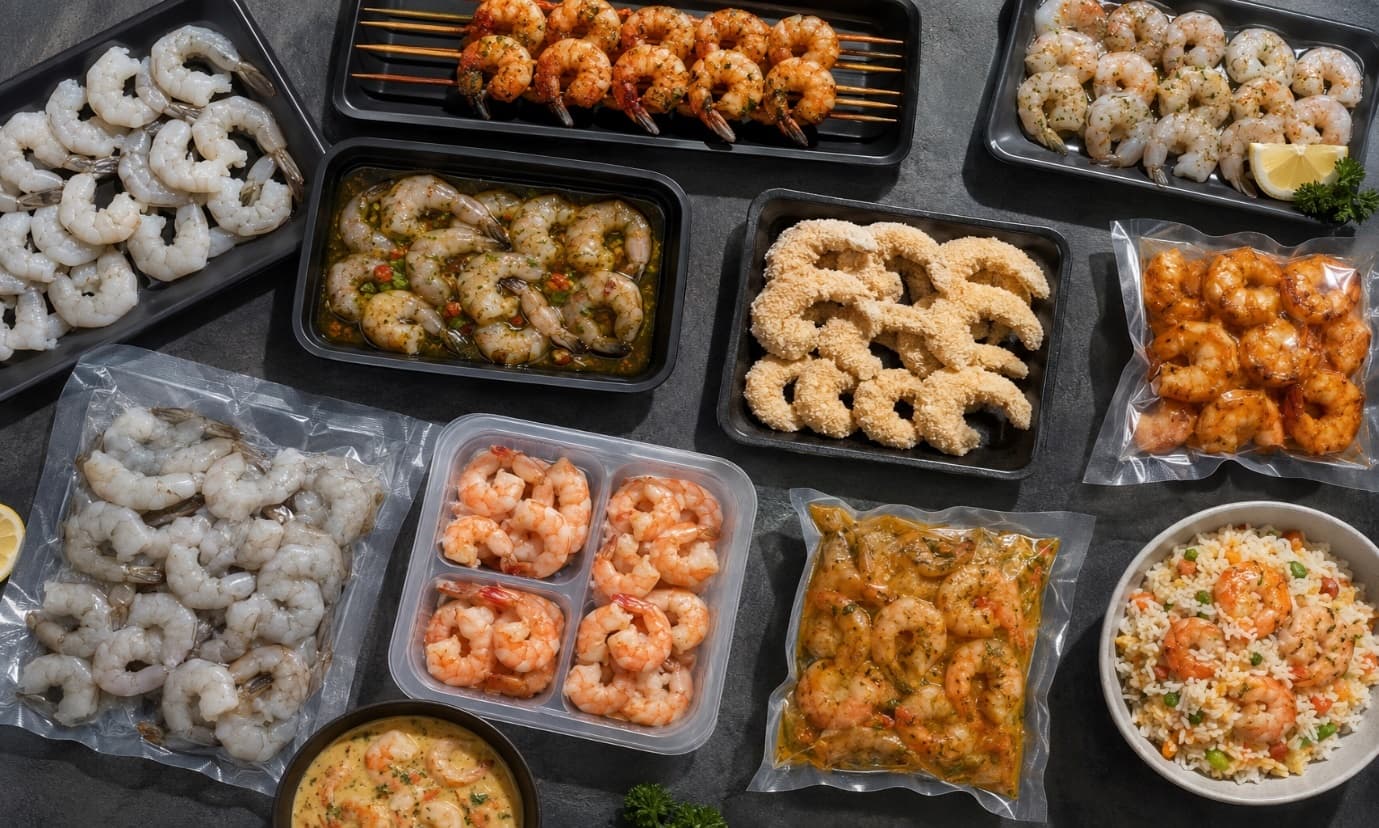
Consumers can choose from various products including:
- Fresh shrimp
- Frozen shrimp
- IQF shrimp
- Peeled shrimp
- Cooked shrimp
- Marinated shrimp
- Ready-to-cook shrimp
At home, proper refrigeration, safe thawing, and correct cooking complete the final stage of the farm-to-plate journey.
Why Every Step Matters
Every stage of the shrimp supply chain influences the final product.
Healthy hatcheries produce quality seed.
Farmers maintain pond health.
Processors ensure hygiene.
Cold-chain operators preserve freshness.
Logistics companies deliver products safely.
Retailers maintain proper storage.
Together, these steps ensure consumers receive shrimp that is safe, nutritious, and of excellent quality.
A weakness at any stage can affect the entire supply chain, which is why coordination and quality control are so important.
Conclusion
The shrimp farm to plate journey is a remarkable example of how modern aquaculture, food processing, and logistics work together to deliver safe seafood to consumers.
From hatcheries and shrimp farming to harvesting, shrimp processing, cold storage, transportation, and retail, every stage is carefully managed to maintain freshness and quality.
India's well-developed shrimp supply chain has helped the country become one of the world's leading seafood exporters while also improving seafood availability for domestic consumers.
The next time you enjoy a shrimp meal, remember that it represents the combined efforts of farmers, processors, quality inspectors, logistics professionals, exporters, and retailers—all working together to bring high-quality seafood from the farm to your plate.