India's shrimp industry has experienced remarkable growth over the past two decades. Once considered a niche aquaculture activity, shrimp farming has evolved into one of the country's most valuable seafood industries, generating billions of dollars in export earnings and supporting millions of livelihoods. Today, India is one of the world's leading producers and exporters of farmed shrimp.
However, the next ten years are expected to bring even greater transformation. The future of Indian shrimp industry will not depend solely on increasing production. Instead, it will be shaped by artificial intelligence, smart farming technologies, sustainable aquaculture, stronger domestic consumption, and continued global competitiveness.
As technology advances and consumer preferences change, India's shrimp industry is entering a new era where innovation and efficiency will define success.
India's Shrimp Industry Has Reached a Turning Point
The shrimp industry has already achieved significant milestones through improved hatchery technology, scientific farming practices, better feed, disease management, and modern seafood processing.
India exports premium-quality shrimp to major international markets including the United States, China, Japan, Canada, and Europe. These exports have helped establish the country as a trusted global seafood supplier.
But future growth will require more than expanding production. Rising production costs, disease challenges, climate change, labour shortages, and increasing global competition are encouraging farmers to adopt smarter and more efficient farming methods.
The future of the Indian shrimp industry will be driven by knowledge, technology, and sustainability.
AI in Shrimp Farming Is Becoming a Reality
One of the biggest changes shaping the industry is AI in shrimp farming.
Artificial Intelligence is helping farmers move beyond traditional management by analysing large volumes of farm data and providing real-time recommendations.
AI-powered systems can monitor:
- Water quality
- Feeding behaviour
- Shrimp growth
- Dissolved oxygen
- Weather conditions
- Disease risk indicators
Instead of waiting for problems to appear, AI helps farmers identify risks early and make faster management decisions.
This improves productivity while reducing production losses.
As AI becomes more affordable, it is expected to become a standard tool across shrimp farms of different sizes.
Smart Aquaculture Technologies Are Changing Farm Management
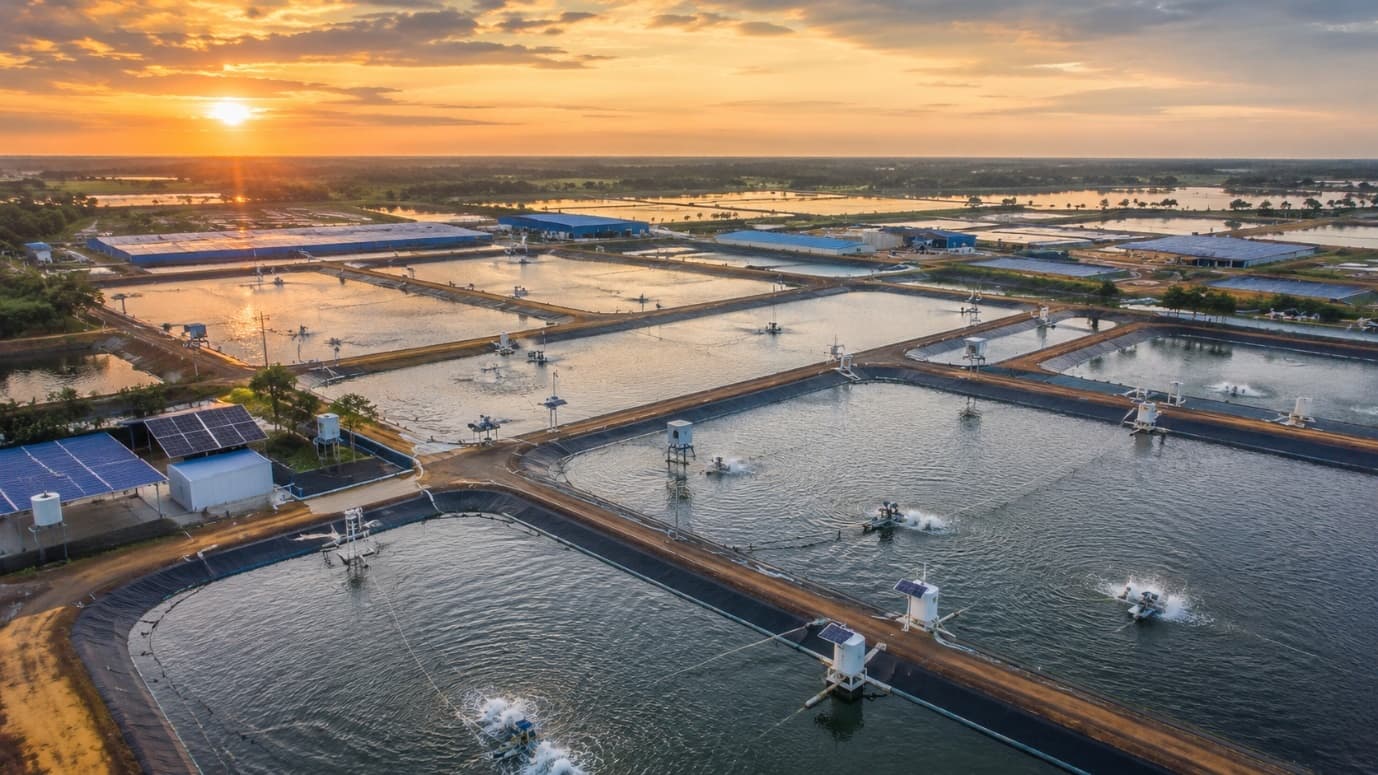
The adoption of smart aquaculture technologies is transforming how shrimp farms operate.
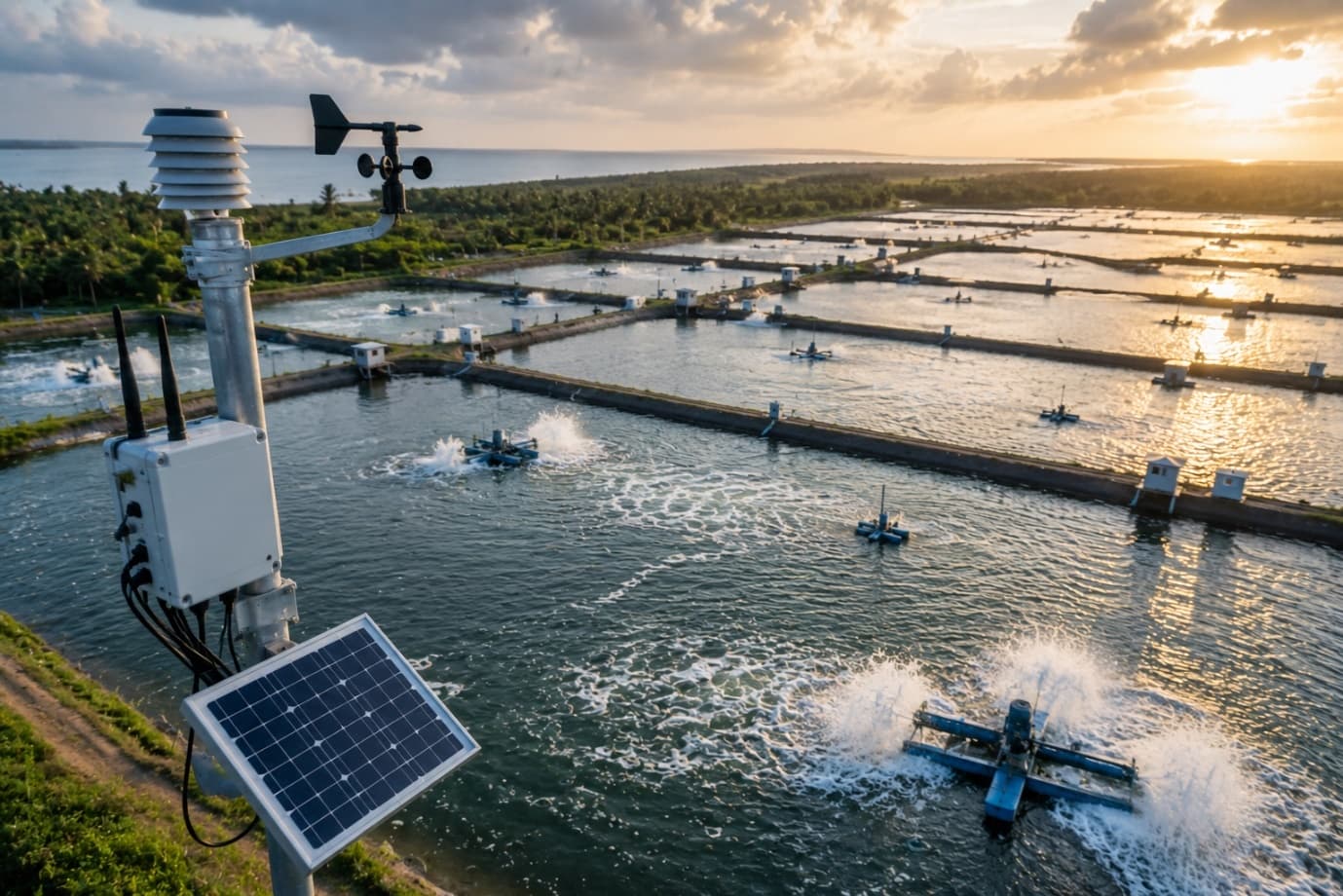
Modern farms increasingly use:
- Water quality sensors
- Automatic feeders
- Smart aeration systems
- Mobile farm management applications
- Cloud-based monitoring platforms
- Remote cameras
- Internet of Things (IoT) devices
These technologies continuously collect farm data and allow farmers to monitor pond conditions from anywhere.
Instead of relying only on manual inspections, farmers can now make decisions based on accurate real-time information.
This improves efficiency while reducing labour requirements.
Automation in Shrimp Farming
Another major trend is automation in shrimp farming.
Routine activities that once required constant manual supervision are gradually becoming automated.
Examples include:
- Automatic feeding systems
- Automated aerator control
- Water quality monitoring
- Environmental alerts
- Digital record keeping
Automation improves consistency while reducing human error.
It also allows farmers to respond more quickly when environmental conditions change.
Rather than replacing farmers, automation supports better management by reducing repetitive tasks and allowing farmers to focus on decision-making.
Technology Transforming Aquaculture
The pace of technology transforming aquaculture continues to accelerate.
Digital innovation is improving nearly every stage of shrimp production.
Modern technologies now support:
- Precision feeding
- Water quality management
- Disease monitoring
- Farm analytics
- Harvest planning
- Traceability
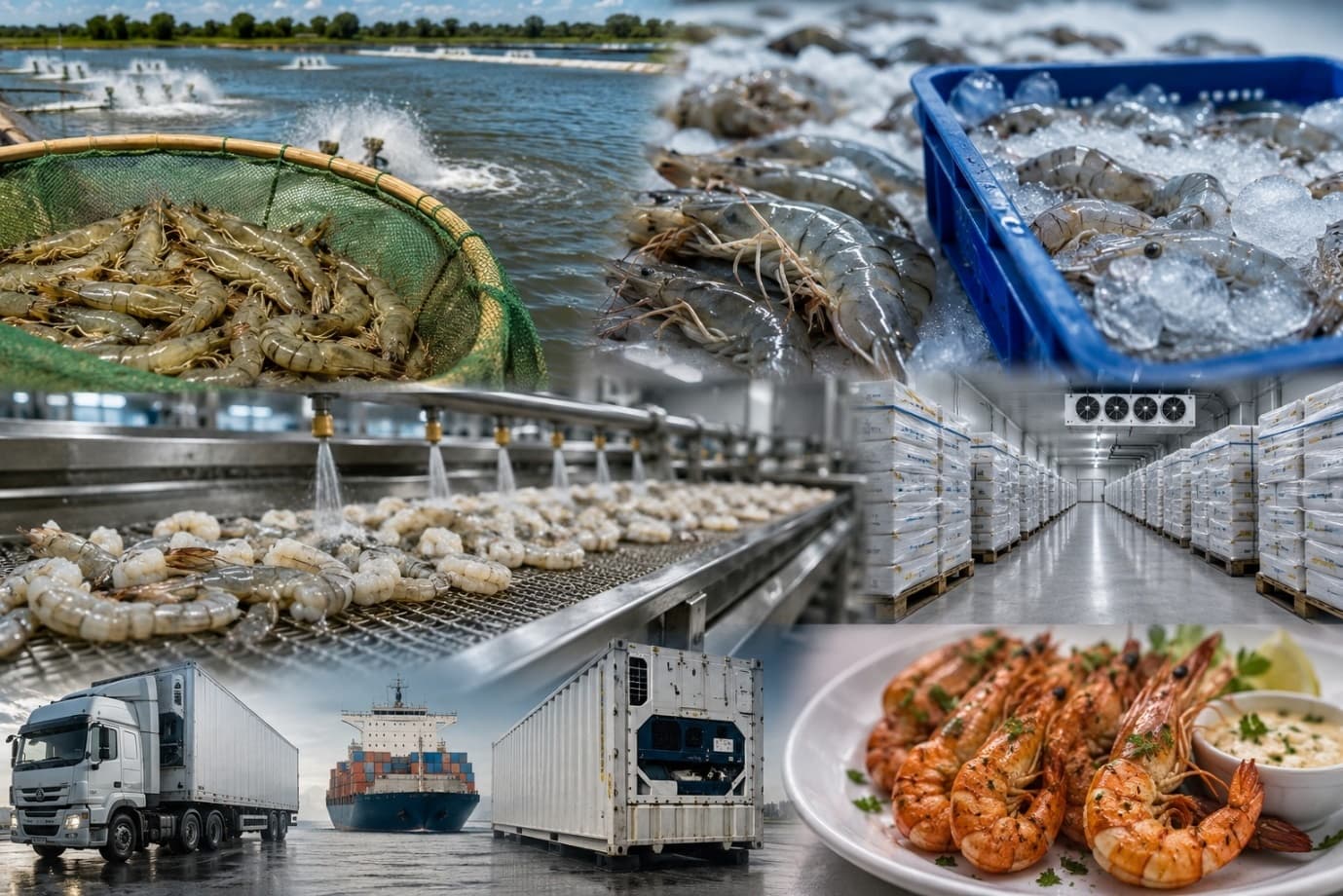
- Supply chain management
Technology also helps improve sustainability by reducing feed waste, conserving water, lowering energy consumption, and improving resource efficiency.
As digital tools continue to evolve, shrimp farming is becoming more predictable and profitable.
Domestic Shrimp Consumption Growth in India
While exports remain the backbone of the industry, domestic shrimp consumption growth in India represents one of the biggest opportunities for the next decade.
India produces large quantities of shrimp but consumes only a relatively small portion domestically.
This is gradually changing.
Urbanization, rising incomes, better cold-chain infrastructure, online seafood delivery platforms, and increasing health awareness are encouraging more Indians to include shrimp in their diets.
Consumers increasingly recognize shrimp as a nutritious source of high-quality protein that is rich in vitamins, minerals, and omega-3 fatty acids.
A stronger domestic market would reduce dependence on exports while creating new opportunities for farmers, processors, retailers, and restaurants.
Global Future of Shrimp Exports
The global future of shrimp exports remains promising despite increasing competition.
Worldwide demand for seafood continues to grow because of population growth, changing dietary habits, and greater awareness of healthy eating.
However, India will face stronger competition from shrimp-producing countries such as Ecuador, Vietnam, Indonesia, and Thailand.
To remain competitive, Indian producers must continue improving:
- Productivity
- Food safety
- Traceability
- Sustainability
- Processing technology
- Product quality
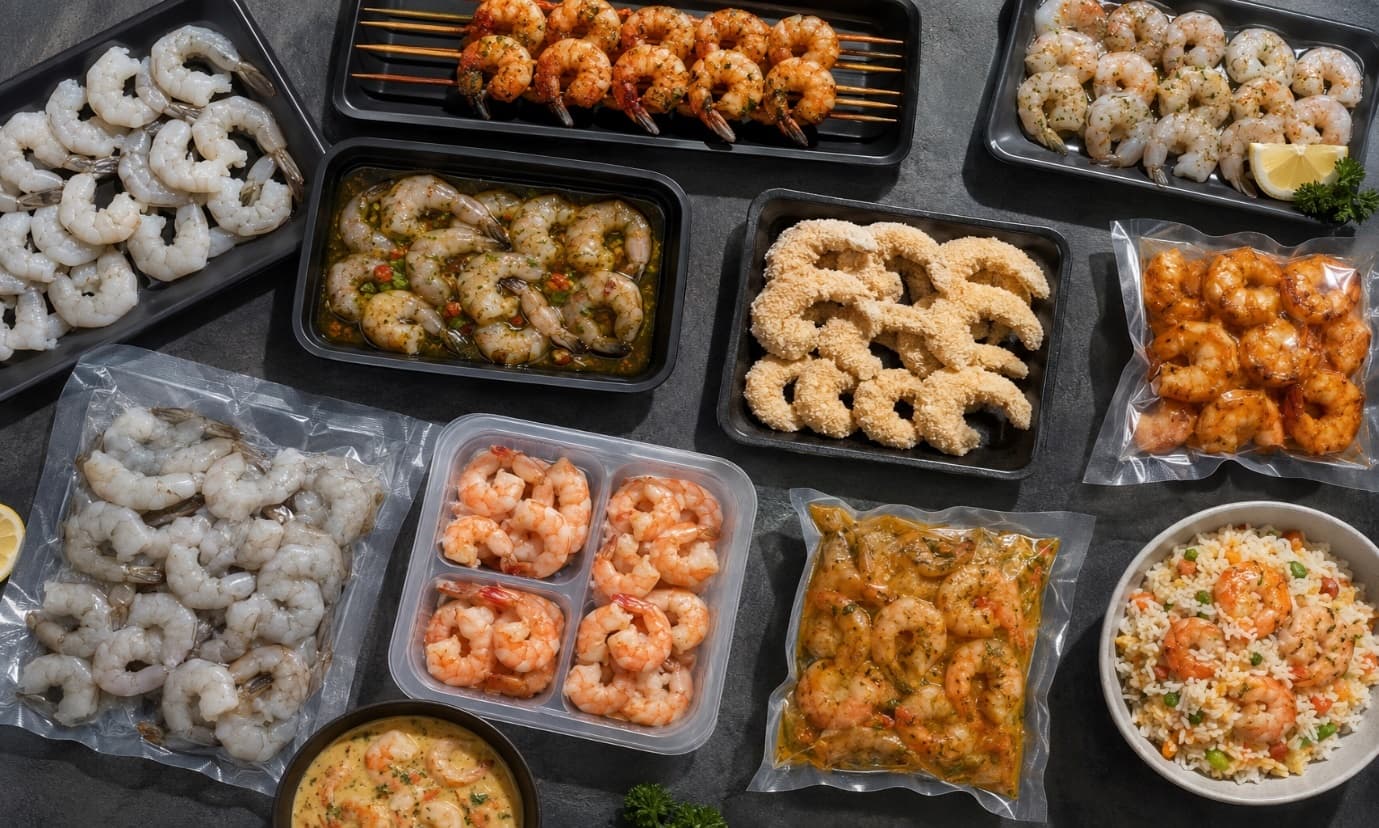
- Value-added seafood products
Maintaining international competitiveness will require continuous innovation throughout the supply chain.
Innovation in the Indian Shrimp Industry
Continuous innovation in the Indian shrimp industry will determine long-term success.
Future innovations are expected in areas such as:
- Improved shrimp genetics
- Disease-resistant breeding programmes
- Sustainable feeds
- Renewable energy solutions
- Precision aquaculture
- Digital farm management
- Automated processing
- Advanced cold-chain systems
Innovation benefits every participant in the value chain—from hatcheries and farmers to processors, exporters, retailers, and consumers.
The industry that adapts fastest will remain globally competitive.
Future Trends in Shrimp Farming
Several important future trends in shrimp farming are already becoming visible.
These include:
- Greater adoption of Artificial Intelligence.
- Increased automation.
- Precision water quality management.
- Sustainable farming practices.
- Climate-smart aquaculture.
- Expansion of value-added seafood products.
- Digital farm management.
- Better traceability systems.
- Growth of domestic seafood consumption.
Together, these trends will create a more efficient, resilient, and environmentally responsible shrimp industry.
The Next Generation of Shrimp Farming
The next generation of shrimp farming will combine experience with technology.
Future farmers will rely not only on observation but also on real-time data collected through sensors, AI platforms, and digital monitoring systems.
Water quality will be monitored automatically.
Feeding schedules will become more precise.
Disease risks will be identified earlier.
Farm management decisions will increasingly be supported by predictive analytics rather than guesswork.
This combination of traditional farming knowledge and modern technology will improve productivity while reducing environmental impacts.
The Role of Indian Aquaculture in the Global Seafood Industry
The future of Indian aquaculture extends beyond exports.
India has the opportunity to become a global leader in sustainable seafood production, technological innovation, and value-added processing.
By investing in research, farmer education, digital technologies, responsible farming practices, and domestic market development, the country can strengthen its leadership position in global aquaculture.
A balanced industry supported by exports, domestic consumption, and technological advancement will be more resilient to future market challenges.
Conclusion
The future of Indian shrimp industry is brighter than ever, but success will depend on embracing change. Artificial intelligence, automation, digital monitoring, and smart aquaculture technologies are transforming how shrimp is produced, while growing domestic demand is creating new opportunities alongside exports.
The next decade will not simply be about producing more shrimp. It will be about producing shrimp more efficiently, more sustainably, and with greater precision. Farmers who adopt AI in shrimp farming, embrace innovation, and invest in modern management practices will be better positioned to succeed in an increasingly competitive global market.
With continued investment in technology, sustainability, value addition, and consumer awareness, India has every opportunity to strengthen its position as a global leader in aquaculture. The next generation of shrimp farming will be smarter, more connected, and more resilient—ensuring that India's shrimp industry continues to thrive for decades to come.