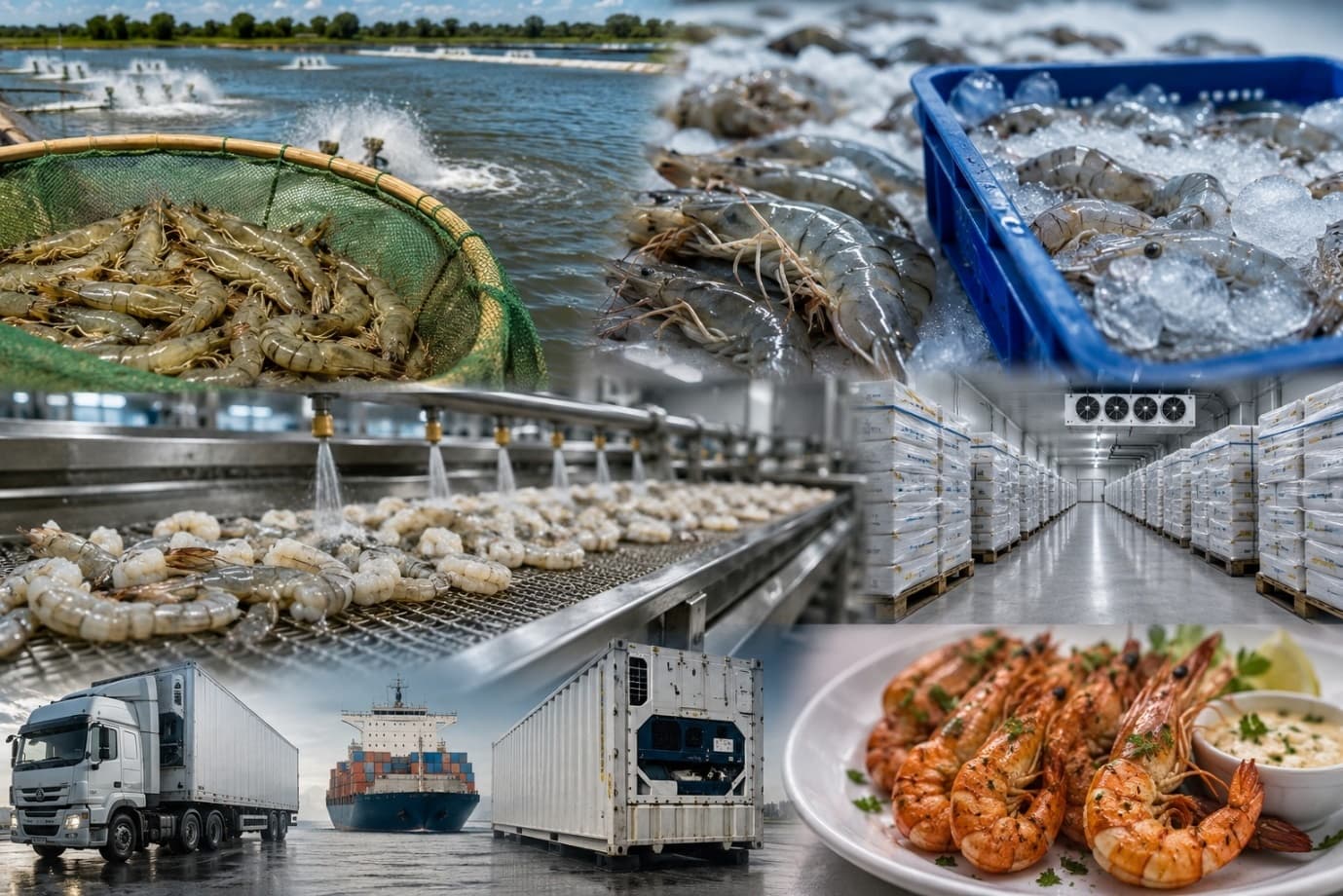
India is one of the world's largest producers and exporters of farmed shrimp. Every year, millions of tonnes of shrimp are harvested, processed, and shipped to international markets. While raw frozen shrimp continues to dominate exports, the global seafood industry is rapidly shifting towards products that offer greater convenience, longer shelf life, and higher value.
Consumers today want seafood that is easy to prepare, ready to cook, and available in convenient packaging. This changing lifestyle is creating enormous opportunities for value added shrimp products, which generate higher returns than exporting raw shrimp alone.
For India, the future of the shrimp industry lies not only in producing more shrimp but also in creating innovative seafood products that meet the evolving needs of consumers around the world.
What Are Value-Added Shrimp Products?
Value added shrimp products are seafood products that undergo additional processing beyond simple cleaning and freezing.
Instead of selling shrimp in its raw form, processors transform it into products that are easier for consumers to prepare and enjoy.
Examples include:
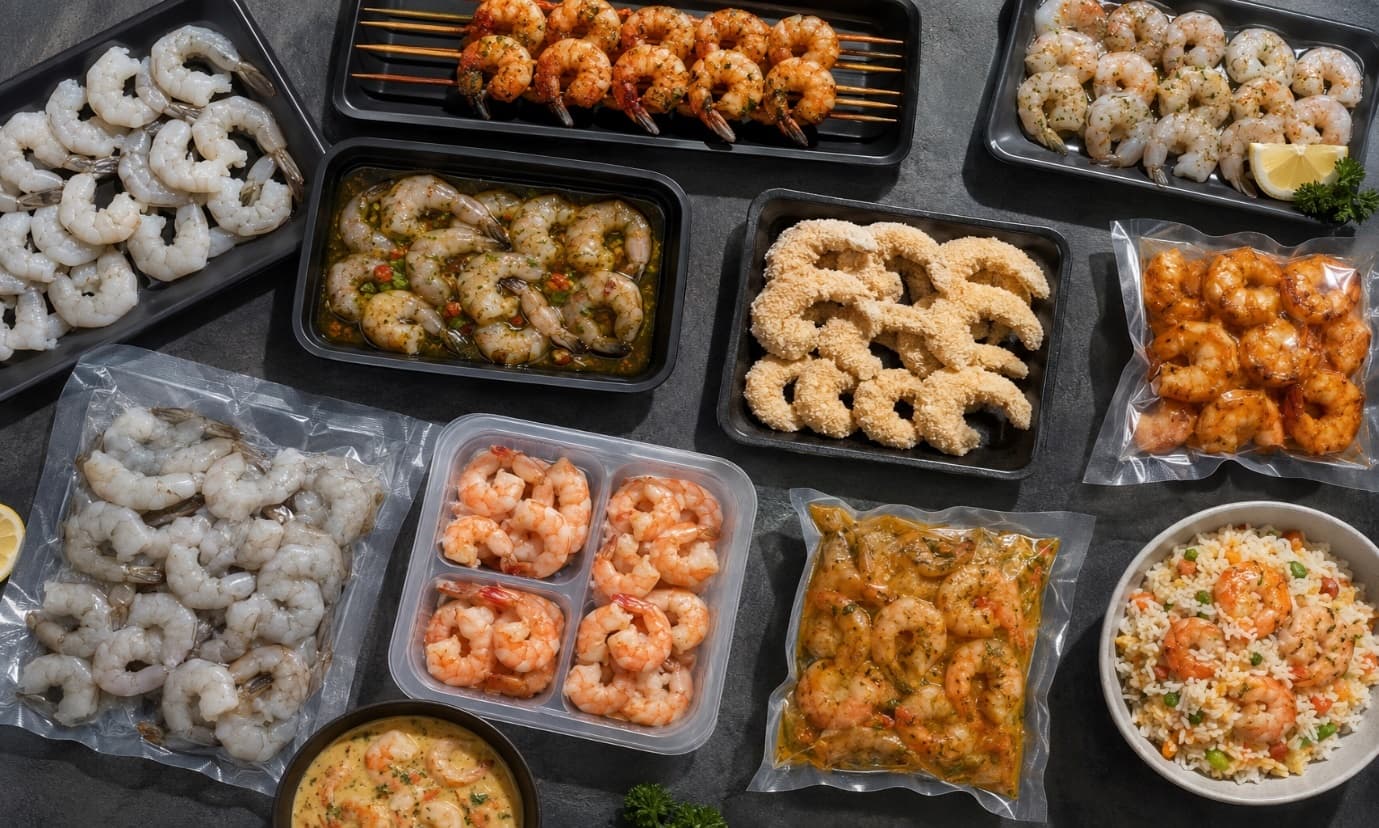
- Peeled and deveined shrimp
- Marinated shrimp
- Breaded shrimp
- Seasoned shrimp
- Skewered shrimp
- Cooked shrimp
- Ready-to-cook shrimp
- Ready-to-eat shrimp meals
These products save consumers time while increasing the market value of shrimp.
Value addition benefits processors, retailers, exporters, and consumers by offering greater convenience and product variety.
Why the Global Market Is Changing
Consumer lifestyles have changed dramatically over the past decade.
Busy families, working professionals, and younger consumers increasingly prefer foods that require minimal preparation.
Instead of purchasing raw seafood and spending time cleaning and cooking it, many people now choose ready-to-cook shrimp products that can be prepared within minutes.
Restaurants, hotels, supermarkets, and online grocery platforms also prefer standardized products that provide consistent quality and reduce kitchen preparation time.
These changing consumption patterns are driving rapid growth in seafood value addition worldwide.
Value-Added Shrimp Products in India
Although India is a global leader in shrimp production, value-added shrimp products in India still represent a relatively small share of total shrimp exports.
Traditionally, much of India's shrimp has been exported as frozen raw products.
However, processing companies are increasingly investing in advanced manufacturing facilities capable of producing premium retail products for international markets.
This creates an opportunity for India to earn higher export revenue without necessarily increasing shrimp production.
Producing more value-added products allows the industry to generate greater income from every kilogram of shrimp harvested.
The Growing Frozen Shrimp Product Market
The frozen shrimp product market continues to expand across both developed and emerging economies.
Modern freezing technologies preserve freshness, texture, taste, and nutritional value while allowing products to be transported over long distances.
Consumers appreciate frozen shrimp because it offers:
- Longer shelf life.
- Consistent quality.
- Year-round availability.
- Convenient storage.
- Easy meal preparation.
As supermarket chains and online grocery platforms continue expanding globally, demand for frozen seafood products is expected to grow steadily.
India is well positioned to benefit from this increasing demand.
Ready-to-Cook Shrimp Products Are Driving Consumer Demand
Among all seafood categories, ready-to-cook shrimp products are experiencing some of the fastest growth.
Consumers now prefer products that require little preparation while still offering restaurant-quality meals at home.
Popular products include:
- Marinated shrimp.
- Garlic butter shrimp.
- Breaded shrimp.
- Spiced shrimp.
- Shrimp skewers.
- Shrimp curry kits.
- Stir-fry shrimp packs.
These products reduce cooking time while making seafood more accessible for first-time consumers.
Convenience has become one of the biggest drivers of seafood purchasing decisions.
Cooked Shrimp Products Create New Market Opportunities
Another growing category is cooked shrimp products.
Fully cooked shrimp can be used in salads, sandwiches, pasta, rice dishes, wraps, and ready meals without requiring extensive preparation.
Food service businesses, airlines, hotels, restaurants, and institutional kitchens increasingly purchase cooked shrimp because it reduces labour costs and improves consistency.
For processors, cooked shrimp offers opportunities to develop premium products with higher profit margins than raw shrimp exports.
As global demand for convenience foods continues to increase, cooked seafood products are expected to become even more important.
Seafood Value Addition Benefits the Entire Industry
Seafood value addition creates benefits across the entire shrimp supply chain.
Farmers benefit from stronger demand for high-quality shrimp.
Processors generate higher revenue through premium products.
Retailers gain access to differentiated product ranges.
Consumers enjoy greater convenience and more meal choices.
The national economy benefits through increased export earnings and employment opportunities.
Value addition also encourages investment in food processing technology, product innovation, cold-chain infrastructure, and packaging.
Rather than exporting only raw materials, countries can create greater economic value through advanced food processing.
Shrimp Packaging Solutions Matter
Modern consumers expect food that is convenient, attractive, and easy to store.
This makes shrimp packaging solutions an important part of product development.
Packaging protects shrimp during transportation while extending shelf life and improving food safety.
Popular packaging options include:
- Vacuum packaging.
- Modified Atmosphere Packaging (MAP).
- Resealable pouches.
- Retail trays.
- Portion packs.
- Family packs.
Good packaging also improves branding and helps products stand out in competitive retail markets.
Processed Shrimp Export Opportunities
Growing international demand has created significant processed shrimp export opportunities.
Major importing countries increasingly purchase products that require minimal preparation before consumption.
Retail-ready seafood products often command higher prices than raw frozen shrimp because they provide additional convenience and value.
As India's seafood processing industry expands, processors can diversify their product portfolios while serving supermarkets, restaurants, hotels, and food service companies across global markets.
Value-added exports also reduce dependence on commodity pricing.
Shrimp Retail Products in India's Domestic Market
India's domestic seafood market is also evolving.
Modern supermarkets, online grocery platforms, and quick-commerce services are making shrimp retail products more widely available.
Consumers can now purchase:
- Frozen shrimp.
- Peeled shrimp.
- Marinated shrimp.
- Ready-to-cook meals.
- Breaded shrimp.
- Value-added seafood snacks.
As domestic shrimp consumption grows, value-added products are expected to play an increasingly important role in attracting new consumers who prefer convenience.
The Future of Processed Shrimp
The future of processed shrimp looks extremely promising.
Urbanization, rising incomes, changing lifestyles, and growing health awareness are increasing global demand for convenient seafood products.
Technology is also improving processing efficiency through automation, quality control systems, advanced freezing methods, and digital traceability.
Processors that invest in innovation, food safety, branding, and product development will be well positioned to capture future market growth.
The seafood industry is gradually shifting from exporting raw commodities to selling premium consumer products.
Shrimp Processing Business: A Growing Opportunity
The expanding shrimp processing business offers significant opportunities for entrepreneurs and investors.
Modern processing facilities require expertise in:
- Food safety.
- Quality control.
- Product development.
- Packaging.
- Cold-chain management.
- Export compliance.
- Marketing.
As demand for value-added seafood continues to increase, processing businesses can generate employment while strengthening India's position in global seafood markets.
The future lies not only in farming shrimp but also in creating innovative products that deliver greater value to consumers.
Conclusion
The next chapter of India's shrimp industry will be driven by innovation rather than volume alone. While raw shrimp exports will remain important, value added shrimp products offer an opportunity to generate higher income, strengthen export competitiveness, and meet changing consumer expectations.
Growing demand for processed shrimp, ready-to-cook shrimp, cooked shrimp, and premium retail products is reshaping the global seafood industry. At the same time, improvements in shrimp packaging solutions, food processing technology, and seafood value addition are opening new opportunities for businesses across the value chain.
For India, investing in value-added processing is more than a business opportunity—it is a strategic pathway toward long-term growth. By expanding its portfolio of innovative shrimp products, the country can move beyond exporting raw seafood and establish itself as a global leader in premium, high-value seafood products.